Tech
The Electric Shift: How EV Technology Is Transforming Mobility
Introduction
The global transportation industry is experiencing a powerful transformation known as EV technology. As governments and consumers shift toward cleaner energy, electric vehicles (EVs) are replacing traditional fuel-powered cars at a rapid pace. This electric shift is driven by advances in battery innovation, sustainable mobility, and green transportation solutions. Modern electric mobility systems now offer longer range, faster charging, and smarter connectivity than ever before. In addition, rising fuel costs and climate concerns are accelerating demand for zero-emission vehicles. As infrastructure expands and technology improves, EV technology is no longer the future it is actively reshaping how the world moves today.
This blog explores the fundamentals of EV technology, its benefits, challenges, and the trends that are driving the global transition to electric mobility.
What is EV Technology?
EV technology refers to the systems and innovations that power electric vehicles, replacing conventional fuel-driven engines with electric motors and batteries. Unlike internal combustion engine (ICE) vehicles, EVs use stored electrical energy for propulsion, making them cleaner, quieter, and often more cost-efficient.
Key Components of EV Tech include:
- Battery Systems – Store and supply power.
- Electric Motors – Convert electrical energy into mechanical energy.
- Charging Infrastructure – Networks that recharge EV batteries.
- Software & AI – Optimize energy efficiency and integrate smart driving features.
Evolution of EV Technology
- Early 19th Century – First prototypes of electric vehicles appeared, but limited by battery technology.
- Late 20th Century – Introduction of hybrid vehicles (e.g., Toyota Prius).
- 2000s – Lithium-ion batteries revolutionized EV performance.
- 2010s – Tesla, Nissan, and Chevrolet popularized modern EVs.
- 2020s – Emergence of solid-state batteries, wireless charging, and AI-driven EVs.
Core Components of EV Technology
1. Battery Systems
The battery is the heart of an EV.

- Lithium-ion Batteries – Current standard, offering balance of cost, weight, and performance.
- Solid-State Batteries – Next-generation tech with faster charging, higher capacity, and safety benefits.
- Battery Recycling – Essential for sustainability, reducing reliance on rare earth metals.
2. Electric Motors
EVs rely on motors instead of engines.
- Induction Motors – Used by Tesla for durability.
- Permanent Magnet Motors – Efficient but depend on rare earth materials.
- Switch Reluctance Motors – Gaining popularity due to efficiency and cost-effectiveness.
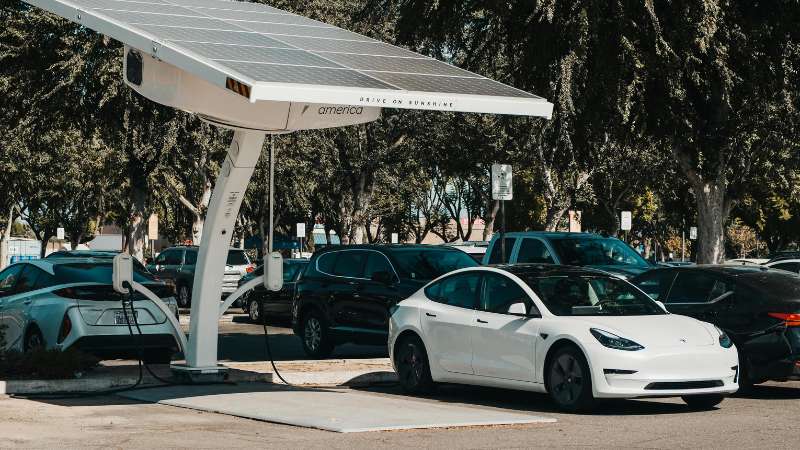
3. Charging Infrastructure
- Level 1 (Slow Charging): Household outlets, ~8–12 hours for full charge.
- Level 2 (Fast Charging): Common in homes/offices, 3–6 hours.
- DC Fast Charging: Rapid, ~30 minutes to 1 hour.
- Wireless Charging: Emerging tech for convenience.
4. Software & AI Integration
EVs are as much about software as hardware.
- AI optimizes battery usage.
- Smart navigation suggests charging stations.
- Over-the-air (OTA) updates improve features.
- Integration with autonomous driving systems
Benefits of EV Technology
- Environmental Sustainability – Zero tailpipe emissions reduce air pollution.
- Lower Operating Costs – Electricity is cheaper than fuel; fewer moving parts mean less maintenance.
- Energy Efficiency – EVs convert ~60% of energy into motion (vs ~20% for ICE vehicles).
- Government Incentives – Tax breaks, subsidies, and priority access to urban areas.
- Noise Reduction – EVs operate quietly, improving urban living conditions.
Challenges Facing EV Technology
- High Initial Cost – Batteries still make EVs more expensive upfront.
- Charging Infrastructure Gaps – Limited access in rural areas.
- Range Anxiety – Fear of running out of charge.
- Battery Life & Recycling Issues – Sustainability concerns remain.
- Grid Demand – Increased EV adoption puts pressure on energy grids.
Future Trends in EV Technology
- Solid-State Batteries – Promising faster charging and greater energy density.
- Vehicle-to-Grid (V2G) – EVs feeding power back into grids during peak hours.
- Autonomous EVs – Combining self-driving tech with electric propulsion.
- Hydrogen Fuel Cell EVs – Offering long-range clean energy.
- Global Expansion of Charging Networks – Faster and more accessible infrastructure.

Global Adoption of EV Tech
- China – World leader with largest EV market and government support.
- Europe – Strong regulations pushing for 100% EV adoption by 2035.
- United States – Rapid expansion led by Tesla, Rivian, and GM.
- Developing Countries – Gradual adoption due to infrastructure and affordability issues.
Click here for free guide
Robotics and Automation in 2026
EV Tech for Consumers
How to Choose an EV:
- Check battery range.
- Review charging options nearby.
- Compare total cost of ownership (TCO).
- Look for government incentives.
Lifestyle Impact:
- Lower maintenance.
- Eco-conscious driving.
- Need to plan charging stops during long trips.
Conclusion
The world is entering a new transportation era powered by EV technology and intelligent innovation. As electric vehicles (EVs) become more efficient and affordable, they are accelerating the transition toward sustainable mobility and green transportation solutions. Continuous progress in battery innovation, expanding charging networks, and growing demand for zero-emission vehicles prove that the electric shift is not temporary—it is transformational. Businesses, governments, and consumers are now investing heavily in electric mobility systems to reduce emissions and fuel dependency. Ultimately, EV technology is not just changing how we drive; it is redefining the future of global transportation.
FAQs
What is EV technology?
EV technology refers to systems that power vehicles using electricity instead of gasoline or diesel engines.
It includes battery packs, electric motors, charging systems, and smart energy management software.
What are the four types of EV?
The four main types are BEV (Battery Electric Vehicle), HEV (Hybrid Electric Vehicle), PHEV (Plug-in Hybrid), and FCEV (Fuel Cell Electric Vehicle).
Each type differs in how it generates and stores energy.
What is the biggest problem with EV cars?
The biggest challenge is limited charging infrastructure and longer charging time compared to refueling petrol cars.
Battery cost and range anxiety are also common concerns.
What happens to EV after 8 years?
After 8 years, most EV batteries still retain 70–80% of their capacity.
Many manufacturers provide an 8-year battery warranty for performance assurance.
What is better, EV or hybrid?
An EV is better for zero emissions and lower running costs if charging is easily available.
A hybrid is better for long-distance driving where charging stations are limited.
What is the #1 selling electric car?
Globally, the Tesla Model Y has been the top-selling electric car in recent years.
It leads due to strong range, performance, and global availability.
Related Articals